
Reading Trimble County Deed Types
Every recorded deed names the parties, describes the land, and carries a recording reference. The caption tells you the instrument's purpose. Its legal effect still depends on the wording inside. The Trimble County Clerk accepts deeds, corrections, restrictions, easements, affidavits of descent, wills, powers of attorney, and related papers.
| Deed Type | What It Does | Common Use |
|---|---|---|
| Warranty deed | Conveys land with stated title promises | Arm's-length transfer |
| Quitclaim deed | Conveys the interest the grantor may hold | Family or title cleanup |
| Correction deed | Corrects an error in a prior deed | Name or description fix |
| Executor or trustee deed | Conveys through a fiduciary | Estate or trust transfer |
| Affidavit of descent | Places heirship facts in the record | Death-transfer trail |
Mortgages, liens, lis pendens filings, and fixture filings work differently. Each records a claim or burden, not a transfer of title. Pull the matching release or satisfaction too. Read Trimble County deed records as one connected file rather than a single name hit. Keep each reference together.
Trimble County eCCLIX Fields
The clerk points online users to eCCLIX. The exact Trimble screens sit behind account access, and options vary by county, but the documented search modes give you a focused way in.
| Search field | What to enter | Use |
|---|---|---|
| Grantor | Seller or conveying party | Trace an outgoing deed |
| Grantee | Buyer or receiving party | Find an acquiring deed |
| Party name | Person, trust, or entity variant | Broaden a name search |
| Book and page | Known citation | Reach an exact record |
| Instrument number | Clerk filing number | Reach an exact filing |
The system offers no direct parcel or tax-bill search. Get the owner name and legal description from the PVA first, then carry those clues into the index.
Trimble County Deed Image Cutovers
The clerk advertises deed images from April 2002 forward. Mortgage images begin in September 2006. Those are image dates, not an online index cutoff. A result can still point to a record whose image requires the counter or an older book. Ask whether the index covers a date even when the image does not. Then request the book, page, instrument image, or copy through the clerk at 30 Hwy 42 E, Bedford, 502-255-7174. Account and single-day service options may apply through eCCLIX.
Trimble County eCCLIX Coverage
The official eCCLIX availability page is the source for checking county participation.
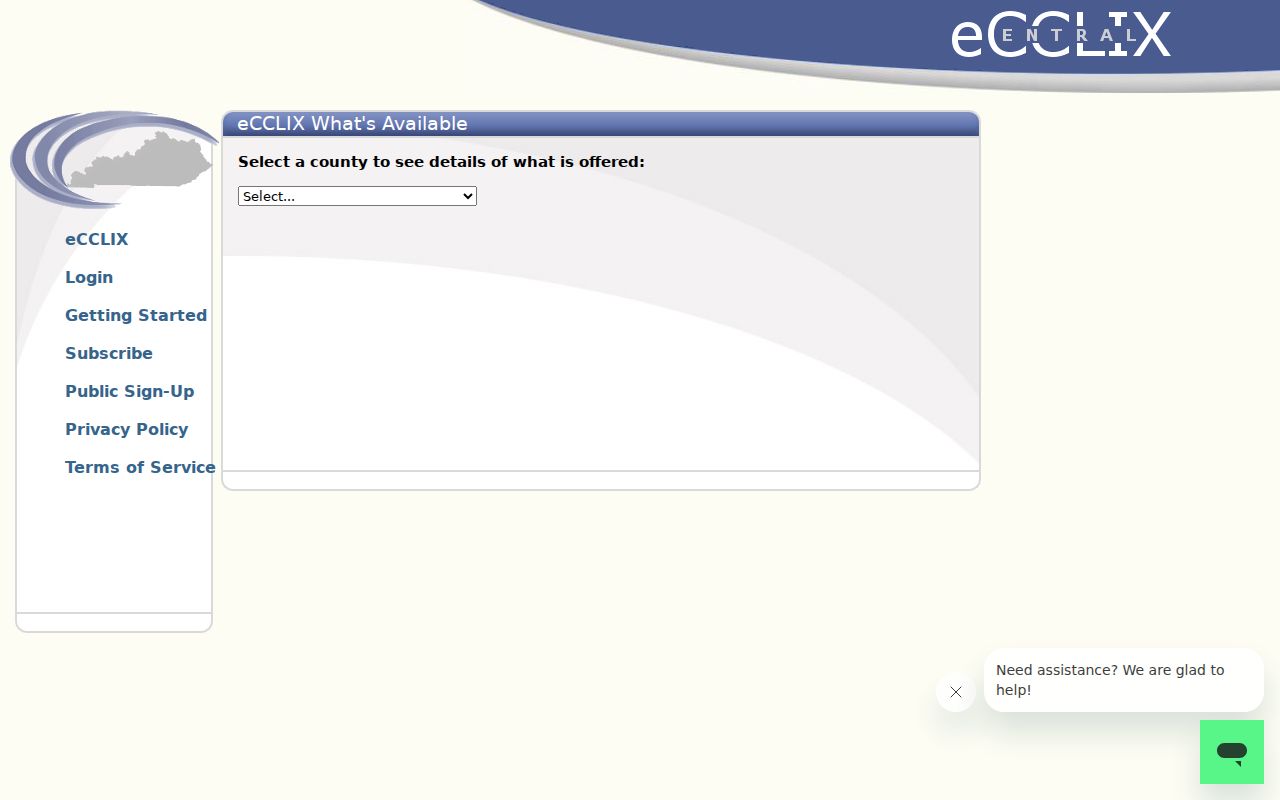
For deeds within the online image span, eCCLIX covers the route. Material that falls outside it goes back to the clerk and KDLA.
Following Trimble County Grantors
A chain follows people and references, not addresses. Start with the newest deed tied to the parcel. Make each prior owner the subject of the next search. Confirm the same land at every step, because one person may have conveyed several tracts.
- Find the current owner's acquiring deed with that owner indexed as grantee.
- Read the grantor, recording date, book/page, and legal description from the instrument.
- Search that grantor as a grantee in an earlier period. Match the same tract.
- Repeat until the online material ends, then carry the last citation to the clerk or KDLA.
- Grantor
- The party conveying an interest.
- Grantee
- The party receiving an interest.
- Chain of title
- The linked sequence of transfers for the same land.
- Book/page
- A volume and page citation for a recorded instrument.
- Instrument number
- A filing identifier assigned by the clerk.
Historic Trimble County Deed Books
The KDLA land inventory lists Trimble deed microfilm from 1837 through 2015. That opening year matches the county's legal organization. Wills and land warrants also begin in 1837. Survey microfilm starts in 1838. Together these series explain inheritance and early land descriptions. When requesting older material, use the last known party, an approximate year, a deed book, an adjacent owner, a creek, a road, or a warrant clue. Early descriptions often lean on farms and natural features, since official county history says highways did not arrive until 1927. A modern street address may never appear in the original instrument.
The 1952 Trimble Records Checkpoint
KDLA's courthouse-disaster list flags Trimble County in 1952. It does not say all land books burned. It names no lost deed series either. Treat the date as a checkpoint, not a verdict. When a chain breaks near that period, ask the clerk or KDLA which index, deed book, tax book, court volume, or copy survived or was reconstructed. Microfilm can overlap both sides of the event. The useful question is always precise: which exact reference cannot be found?
Trimble County Related Instruments
Ownership history often turns on more than a deed caption. An affidavit of descent can document heirship. A will or executor deed can move estate property to a successor. Easements and restrictions may burden use without changing the owner of record. Mortgages, assignments, and releases trace secured debt. Search the same parties around the deed date and inspect each linked instrument. A lis pendens signals pending litigation, not a final judgment. A fixture filing covers secured interests in fixtures and never replaces the deed. These distinctions make Trimble County deed records far more useful. They also make them far less prone to overreading.
Matching Trimble County Land Descriptions
A party match becomes a parcel match only after the land description agrees. Subdivision property may use lot, block, and plat references. Rural tracts may use metes and bounds, which describe courses, distances, monuments, and adjoining owners. The clerk records plats. The posted fee schedule lists a plat filing, though the county publishes no standalone plat viewer for public use.
Copy the description from the newest deed exactly. Compare acreage, calls, subdivision name, lot number, and prior-deed citation at each backward step through the deed records. A PVA parcel number is helpful for the assessment record but is not a direct eCCLIX tax-lot search key. One official Trimble notice prints both parcel 024-30-17-001.00 and Deed Book 145 Page 773. This shows why keeping both systems' references together pays off when tracing a parcel.
Corrections and partial conveyances deserve close attention. A correction deed may fix a name or description without creating an ordinary new sale. A deed may also convey only part of a parent tract. In either case, the later parcel outline cannot safely be projected backward without reading the instrument and the relevant plat or survey.
Trimble County Recording Fees
The clerk's posted schedule is effective January 1, 2020. Confirm the current amount before payment. It lists a deed at $50. A deed correction runs $46, and deed restrictions cost $50. An easement costs $50, a plat $50, and a mortgage $80. A lis pendens runs $46, while a will is $47 to record.
Those figures are recording fees. They are not a full promise of online image or certified-copy pricing. A records request may fall under a statutory copy fee. It may instead follow the clerk's open-record policy. State the exact instrument when asking for a quote. Also say whether a plain or certified copy is needed.
Trimble County DOC ALERT
The clerk's records page points owners to free DOC ALERT notices for a newly filed deed or mortgage under a registered personal or business name. The alert can prompt a quick check of the official filing with the clerk.
It does not block a document, insure title, or prove that a filing is false. Compare the party name, date, document type, recording reference, and legal description with the clerk. Name variants matter, especially for entities, trusts, initials, and prior names.
Ordering a Trimble County Deed
Start with the clerk's land-records page and the eCCLIX link. If the image is not available through the account route, call or visit the clerk. Provide the party names. Give the record date, deed type, book/page or instrument number, and any parcel or legal-description clue.
For a written request, the clerk accepts delivery by hand, mail, fax, or email under its open-record policy. The office makes a determination within five working days, apart from weekends and legal holidays. Ask about the preferred format. Ask about the total copy or certification charge and any advance payment before sending funds.
Recorded, not guaranteed. Trimble County deed records show filed instruments, not a title opinion. Unrecorded interests or unresolved defects may exist, so use qualified title help when certainty is required.
Review the delivered copy for every page, exhibit, acknowledgment, and attachment. Compare its recording reference with the index entry. Check its land description against the parcel under study. If a plain copy arrives when certification was requested, resolve that before a formal filing. For an older deed, preserve the archive citation and reel or volume identifier so another researcher can reproduce the same Trimble County result.